Forced-air furnace service
Forced-Air Furnace Service in Whitehall, MT
A measured seasonal service that finds the failures before winter does — combustion, airflow, safeties and efficiency verified on your forced-air system, with a free consultation on anything we find.
Why forced-air systems need annual attention here
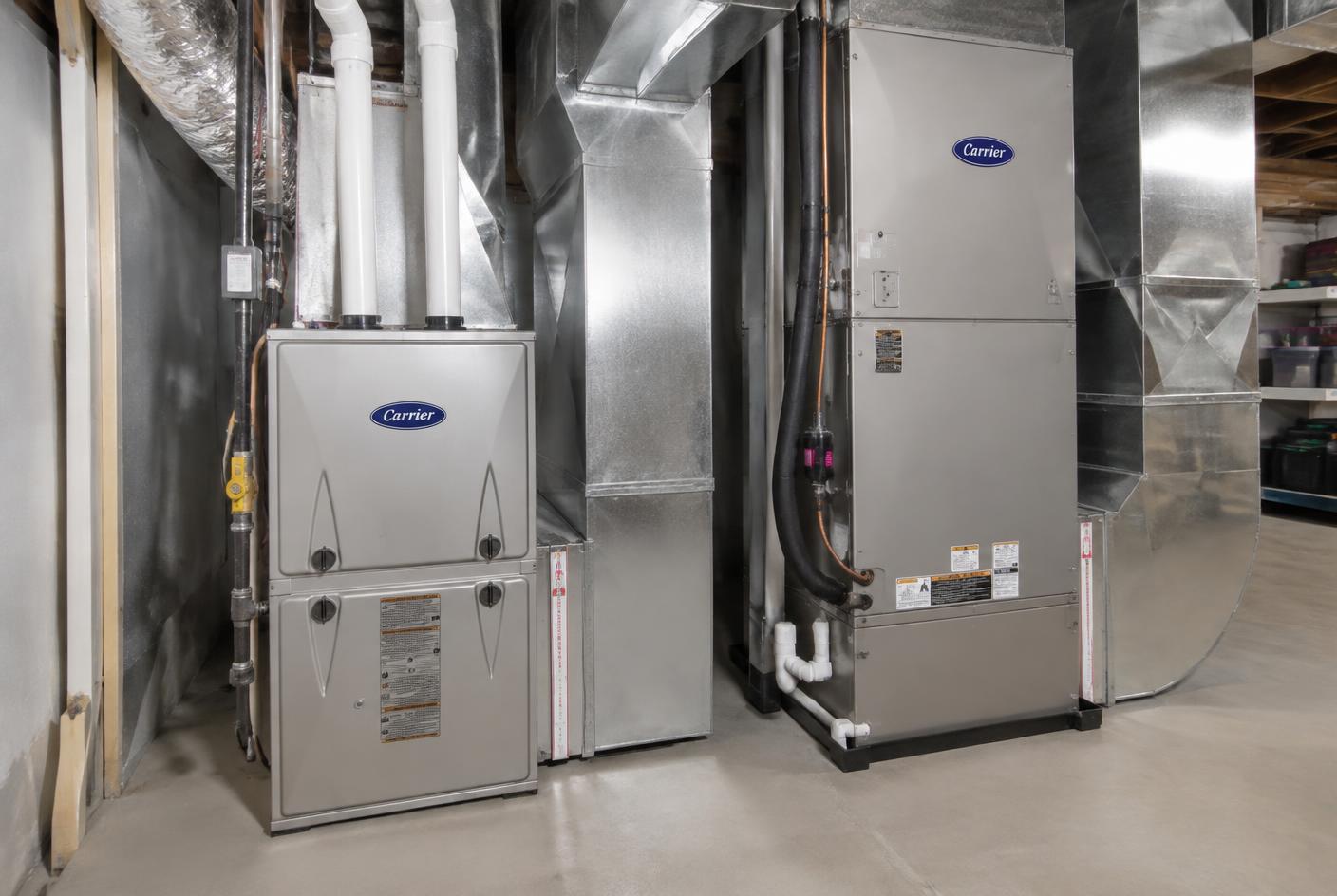
A forced-air furnace in the Jefferson Valley runs for seven to eight months a year, and during the coldest weeks it may run more than it rests. That's tens of thousands of ignition cycles and thousands of hours on a blower motor between one autumn and the next. Components don't fail randomly — they wear, drift out of specification, and signal trouble long before they quit, if someone's measuring.
Servicing a forced-air system is really two jobs. The combustion side — burners, gas pressure, flame quality, draft, venting and heat exchanger integrity — is a safety matter. The air side — filter, blower, static pressure, temperature rise and duct condition — is what decides whether your house feels comfortable and what your gas bill looks like. Skipping either one leaves half the system unverified.
We do both on every visit, and we give you the numbers. If temperature rise is 20 degrees above the rating plate maximum, that's not an opinion, it's a measurement that explains why your furnace trips on limit every February.
What we do on a service visit
We pull and inspect the burner assembly, clean burners as needed, and check flame pattern and color. We measure flame signal so we can tell you whether the flame sensor will make it through another winter. We inspect the heat exchanger, verify manifold gas pressure with altitude derate in mind, and confirm draft and that the flue and intake terminations are clear and correctly pitched.
On the air side we measure static pressure across the filter and coil, calculate temperature rise, inspect and test the blower motor and capacitor, check belt and bearings on older units, and look at accessible ductwork for disconnected runs and crushed flex. On condensing furnaces we clean the condensate trap and drain, since a plugged trap is one of the most common winter shutdown causes.
Finally we test every safety: high limit, roll-out switches, pressure switch, and door interlock. If we find a part that's degraded but not yet failed, you get a price to replace it now, on your schedule — which is a different conversation than emergency furnace repair at midnight in January.
When service turns into a bigger decision
Occasionally a service visit uncovers something that changes the plan: a cracked heat exchanger, a badly rusted secondary on a condensing unit, a control board no longer in production, or a furnace so oversized that no adjustment will stop it short cycling. We tell you immediately, explain the safety implications, and never continue running equipment we believe is unsafe.
In those cases we'll price a properly sized equipment change-out and, if you also want cooling, quote the matched air conditioning side at the same time — installing both together is cheaper than two separate projects. As always, the consultation and quote are free.
If your heating is in a shop, barn or detached garage rather than the house, the equivalent seasonal work happens on unit heaters — same principles, different equipment.
Local knowledge
Built for Whitehall and the Jefferson Valley
Altitude is the piece most often missed on furnaces around Whitehall. Gas equipment must be derated for elevation, and manifold pressure and orifice selection adjusted accordingly. We routinely find furnaces installed years ago at sea-level settings, over-firing, sooting the heat exchanger and wasting fuel every hour they run.
Local construction adds its own quirks. Finished basements, added bedrooms and enclosed porches frequently got a supply register with no matching return, so those rooms stay cold while the furnace fights pressure imbalance. Measuring static pressure identifies it, and the fix is often modest — a return path added, a filter changed to a less restrictive media, a blower tap adjusted.
We schedule most forced-air service between August and October across Whitehall, Cardwell, Boulder, Three Forks and Butte, so any parts needed arrive well before the first hard freeze rather than during it.
Questions & answers
Frequently asked questions
What's actually included in a forced-air furnace service?+
Burner and flame inspection, flame signal measurement, heat exchanger inspection, draft and venting check, gas pressure verification, temperature rise and static pressure measurement, blower and motor inspection, capacitor testing, filter replacement or sizing advice, safety switch testing, condensate system cleaning on high-efficiency units, and thermostat operation. You get the measured values, not just a checkmark.
When is the best time to service a furnace in Montana?+
Late summer through early fall — August to October. Service before the first hard freeze means any parts we find failing can be replaced on a scheduled visit instead of during a no-heat emergency, and you're not competing with the whole valley for appointments during the first cold snap.
Does an annual tune-up really save money?+
Yes, in two ways. Correct combustion, clean burners and proper airflow keep the furnace delivering the efficiency you paid for, which shows on gas bills across a long Montana heating season. More significantly, catching a cracked igniter, weak capacitor or drifting pressure switch during a planned visit avoids an emergency repair and the risk of frozen pipes.
How do I know if my heat exchanger is cracked?+
You often can't from the outside, which is exactly why inspection matters. Warning signs include soot, a strong odor when the burners fire, flames that roll or shift when the blower starts, and repeated limit trips. We inspect visually and use combustion analysis. A confirmed crack means the furnace must be shut down and replaced — it's a carbon monoxide risk, not a maintenance item.
How often should I change my furnace filter here?+
For a standard one-inch filter, every 30 to 60 days during the heating season, and more often during dusty spells or wildfire smoke. Four- and five-inch media filters typically go six to twelve months. Homes on gravel roads out toward Cardwell or with pets should assume the shorter end of every range.
Can you service a furnace you didn't install?+
Absolutely — most of the equipment we service was installed by someone else, often decades ago. We work on all common residential and light commercial forced-air brands, from 80% atmospheric units to modern two-stage and modulating condensing furnaces.
Related services
Other work we do nearby
Furnace & Heating Repair
No heat, short cycling, or a furnace that won't ignite on a 10-below Whitehall morning — diagnosed and repaired right the first time.
Air Conditioning Repair & Service
Warm air, weak airflow, iced coils, or a condenser that won't start during a Jefferson Valley heat stretch.
Unit Heater Service
Shop, barn, and garage unit heaters serviced, cleaned, and tuned so your workspace stays workable in January.
HVAC Equipment Change-Outs
Furnace and AC replacement sized for Montana loads, installed cleanly, with honest repair-versus-replace advice.
Book your furnace service before the first freeze
Call (406) 266-1675 or request a free quote and we'll get your forced-air system measured, tuned and verified safe well ahead of winter in Whitehall and the surrounding valley.