
HVAC equipment change-outs
HVAC Equipment Change-Outs in Whitehall, MT
Furnace and air conditioner replacement done properly — load-calculated, altitude-corrected, cleanly installed and fully commissioned. Free consultation and a written quote before you commit.
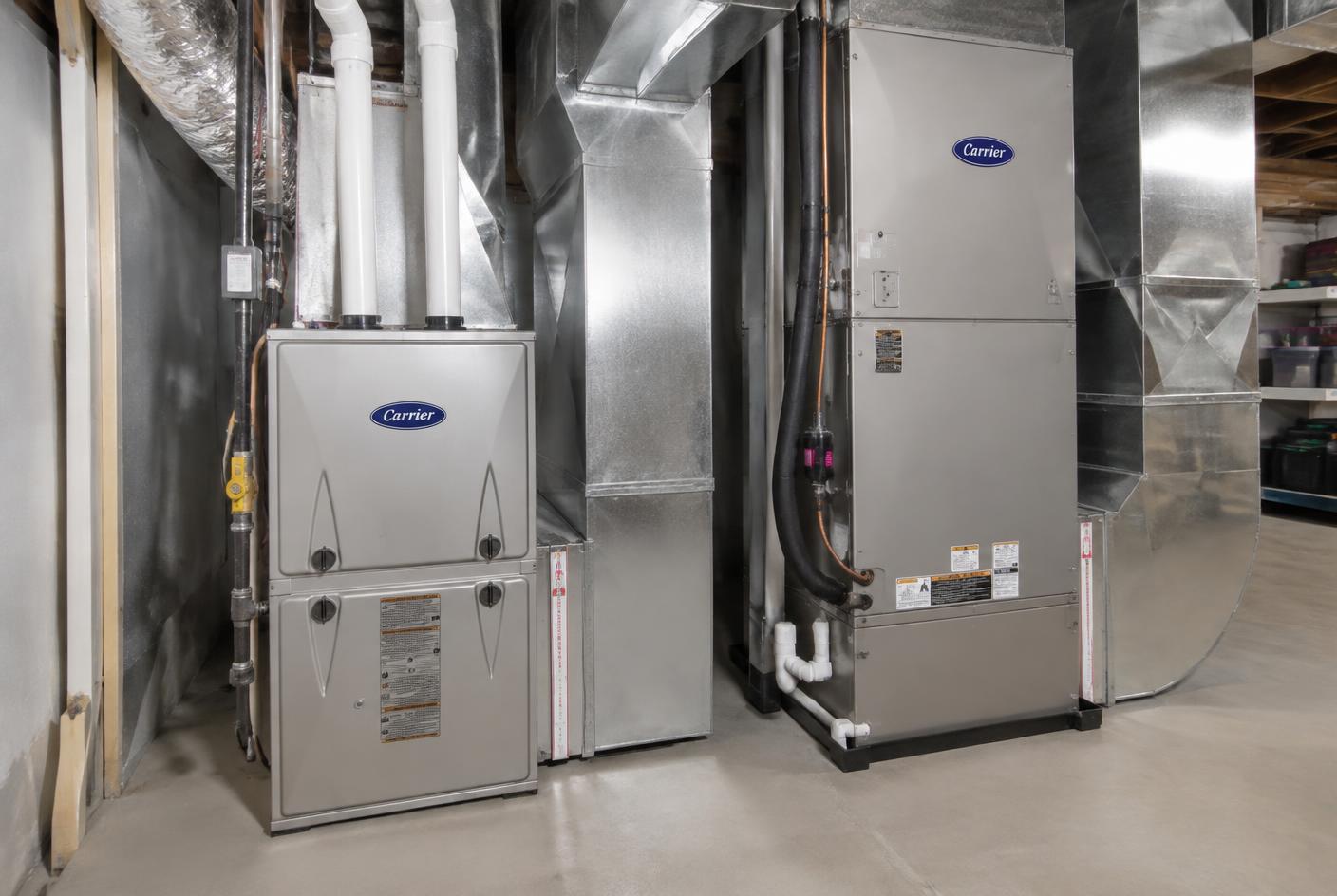
When replacement beats another repair
We don't lead with replacement. Most calls end with a repair, because a well-built furnace with a failed igniter or a condenser with a bad capacitor has plenty of life left. But there's a point where continuing to repair is the more expensive choice, and you deserve to see that clearly rather than discover it after three service calls in one winter.
The honest indicators: age past 18 to 20 years, repeated failures in a single season, a repair cost approaching a third of replacement, discontinued parts, visible heat exchanger corrosion or cracking, or an air conditioner leaking a refrigerant that's no longer produced. Any confirmed heat exchanger crack ends the conversation immediately — that's a carbon monoxide risk, not a judgment call.
When you're at that point, we lay out both paths with real numbers: what the repair costs and what it likely buys you in remaining life, versus what a change-out costs and what it changes in comfort and operating expense. Then you choose. If you'd rather try the repair first, we'll do the furnace repair properly and note what to watch.
How we size and select equipment
Replacing what's there with the same nameplate BTU is the industry's laziest habit, and it perpetuates whatever mistake was made originally. Most homes we see around Whitehall are running furnaces considerably larger than the building needs, because someone rounded up decades ago and every replacement since has matched it.
We calculate the actual load: square footage, ceiling heights, insulation and window condition, orientation and exposure, infiltration, and our local winter design temperature. Then we select equipment that runs long, steady cycles at that load rather than blasting and shutting off. Two-stage and modulating furnaces perform especially well in our climate for exactly that reason.
Altitude is built into the selection and commissioning. Gas input must be derated for elevation near 4,350 feet, and we set manifold pressure and verify combustion accordingly. On the cooling side, thinner air affects both capacity and charge verification, which is why we measure superheat and subcooling instead of trusting a factory charge — see air conditioning service for more on how we verify cooling performance.
Installation and commissioning done right
The equipment matters less than the installation. A premium furnace installed on undersized ductwork with a sloppy plenum transition will underperform a modest unit installed carefully — every time. So we treat the whole system as the project: supply and return plenums fabricated to fit, duct connections sealed, filter rack sized for the airflow the new blower needs, venting run to code with correct slope and termination, condensate drained and protected from freezing, and gas and electrical brought up to current requirements.
Then we commission it. Manifold pressure set with altitude derate, temperature rise measured against the rating plate, static pressure checked, blower speed configured for the actual duct system, safeties tested, thermostat configured for your equipment's staging, and — on cooling systems — charge verified by measurement. Those numbers go in your file and get explained to you.
We finish by walking you through filter access and sizing, thermostat operation, what normal sounds like, and when to schedule the first annual service. If the project involves a shop or outbuilding, we can quote unit heater replacement in the same visit.
Local knowledge
Built for Whitehall and the Jefferson Valley
Change-outs in the Jefferson Valley carry constraints you won't find in a subdivision. Older Whitehall homes have tight basement stairwells and mechanical closets that dictate cabinet width. Homes out toward Cardwell and Waterloo often have additions with duct runs that were never balanced. Properties along the Boulder and up toward Butte deal with real wind exposure that changes venting decisions.
We plan for those during the free consultation, so the quote reflects the building you actually own — including any duct or venting work required — rather than a generic price that grows once the old unit comes out.
Winter design temperatures here run well below zero, which raises the stakes on getting sizing and commissioning right. Equipment that merely "works" in October can leave you short in a February cold snap. We size and set up for the hard weeks, not the easy ones.
Questions & answers
Frequently asked questions
How do I know whether to repair or replace my furnace?+
Weigh the repair cost against equipment age and condition. A furnace under 12 years old with a single failed part is almost always worth repairing. Past 18 to 20 years, with a repair approaching a third of replacement cost, a change-out usually wins — especially if the heat exchanger is corroded or parts are discontinued. A cracked heat exchanger ends the discussion: that unit must be replaced.
What does an HVAC change-out actually involve?+
Removing the old equipment, adapting or replacing the plenum and duct connections, running new venting for a condensing furnace, setting condensate drainage, updating gas piping and electrical as required, installing and commissioning the new equipment with altitude-correct gas pressure, and verifying temperature rise, static pressure and — on cooling systems — charge and superheat before we leave.
How long does a furnace or AC replacement take?+
A straightforward furnace change-out is typically one day. Adding or replacing a matched air conditioner alongside it, or converting an 80% furnace to a 90%-plus condensing unit that needs new PVC venting and condensate routing, can push into a second day. We give you the realistic timeline in the quote, not an optimistic one.
Is a bigger furnace better for a cold Montana winter?+
No — oversizing is one of the most common mistakes we correct. An oversized furnace satisfies the thermostat quickly, shuts off, and repeats, which produces temperature swings, noisy startups, uneven rooms and premature wear. We calculate the load for your building and choose equipment that runs longer, steadier cycles, which is both more comfortable and easier on the machine.
Should I replace the furnace and air conditioner at the same time?+
If both are near end of life, yes. The indoor coil, blower and furnace work as a matched system, and pairing new equipment properly protects both efficiency and warranty coverage. Doing it in one visit also costs less in labor than two separate projects a year or two apart.
Do you provide a free quote for equipment replacement?+
Always. We look at your existing equipment, measure the building, examine the duct system, and give you a written quote with the scope spelled out — at no cost and with no obligation. If a repair is the smarter move this year, we'll tell you that too.
Related services
Other work we do nearby
Furnace & Heating Repair
No heat, short cycling, or a furnace that won't ignite on a 10-below Whitehall morning — diagnosed and repaired right the first time.
Air Conditioning Repair & Service
Warm air, weak airflow, iced coils, or a condenser that won't start during a Jefferson Valley heat stretch.
Forced-Air Furnace Service
Full seasonal tune-ups and combustion checks that keep forced-air systems safe, quiet, and efficient all winter.
Unit Heater Service
Shop, barn, and garage unit heaters serviced, cleaned, and tuned so your workspace stays workable in January.
Get a free, no-pressure replacement quote
Call (406) 266-1675 or request a free quote. We'll assess your equipment, measure your home or shop, and give you honest numbers on both repair and change-out before you decide anything.