Furnace & heating repair
Furnace Repair in Whitehall, MT
When the heat quits in a Montana winter you need a real diagnosis, not a guess. We test, find the actual fault, and fix it — with a free consultation before any work starts.
Heat that fails when you need it most
A furnace almost never chooses a mild afternoon to break. It fails at 5:00 AM in mid-January when the outdoor temperature is fifteen below and the system has been running near-continuously for a week. That's the reality of heating a home in Whitehall, and it's why furnace repair is the core of what we do.
Long run times at high altitude put real stress on components. Igniters that have cycled tens of thousands of times crack. Flame sensors build up an oxide film that weakens the microamp signal until the board decides there's no flame and shuts the gas off. Inducer bearings dry out. Capacitors lose capacitance, and the blower struggles to start against static pressure it was never meant to fight.
Any one of those turns into the same symptom for you: the house gets cold. Our job is to figure out which one it actually is, quickly, and fix that — instead of replacing three parts hoping one of them was the problem.
How we diagnose a no-heat call
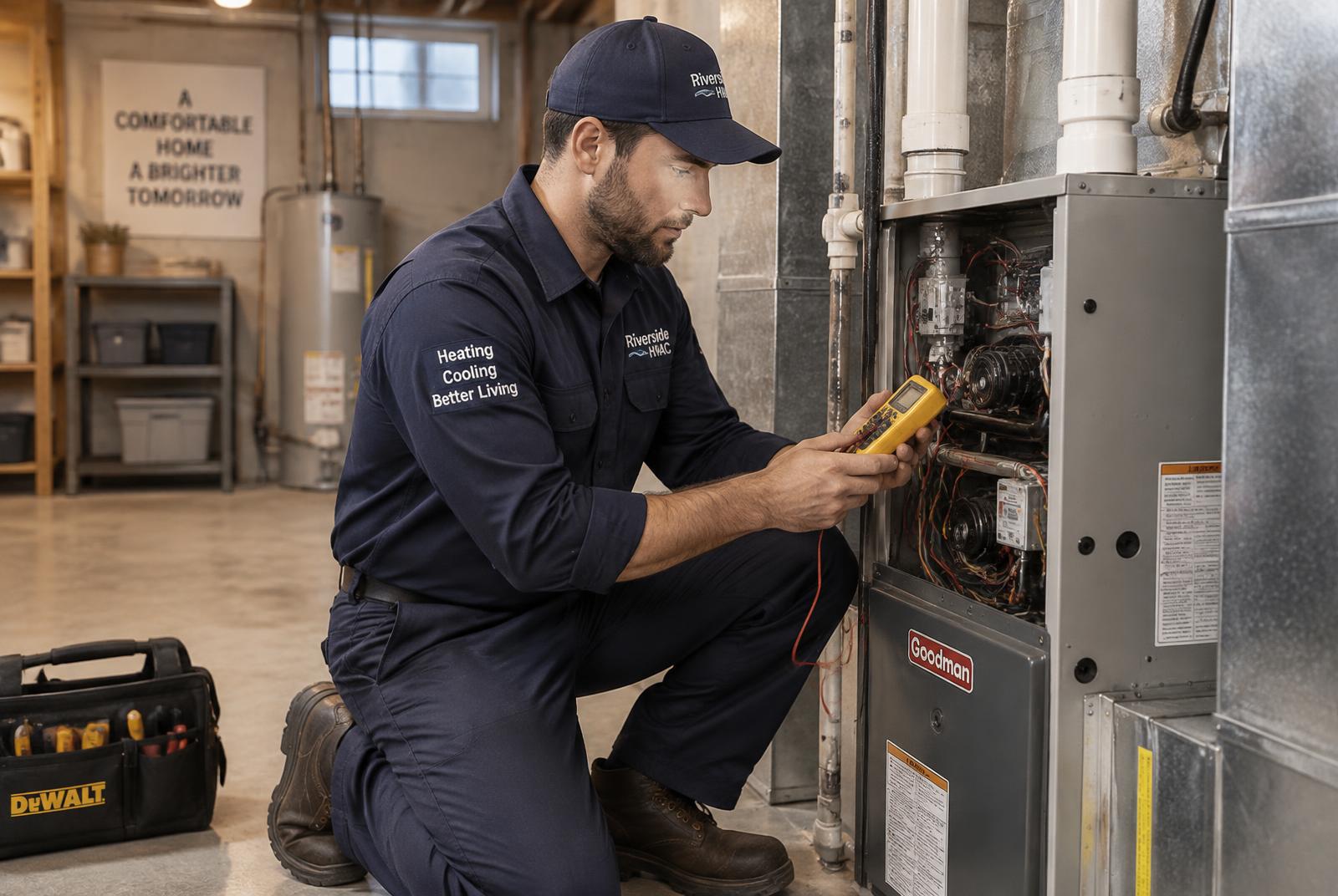
We start with the sequence of operation. A gas furnace follows the same predictable steps every cycle: thermostat call, inducer start, pressure switch close, igniter warm-up, gas valve open, flame proof, blower on. Watching where that sequence stops tells us where the fault lives before a single part comes off the shelf.
From there it's measurement: incoming voltage and control voltage, flame signal in microamps, pressure switch operation, temperature rise across the heat exchanger, static pressure across the filter and coil, capacitor microfarads, and limit switch continuity. We also inspect the heat exchanger for cracking and check flue and intake terminations — a snow drift over a sidewall vent shuts down a 90% furnace in minutes.
Then you get the findings in plain language: what failed, what it costs to repair, and whether the rest of the furnace justifies the expense. If the answer is that the system is at the end of its life, we'll show you the evidence and price an equipment change-out so you can compare both paths side by side.
Repairs we handle regularly
Igniters, flame sensors, pressure switches, inducer motors and assemblies, blower motors and capacitors, run capacitors, gas valves, high and roll-out limit switches, control boards, transformers, thermostats and wiring faults, condensate traps and drain lines on high-efficiency units, and door and blower-compartment safety switches.
We also correct the airflow problems that cause repeat failures: crushed or disconnected flex duct, filters far too restrictive for the blower, closed registers starving the return, and undersized return paths that trip limits every cold snap. Fixing the cause is what keeps you from calling us again next month.
If your furnace is working but you want it checked before winter, our forced-air furnace service is the preventive version of this visit — the same testing, done before something breaks.
Local knowledge
Built for Whitehall and the Jefferson Valley
Whitehall sits at roughly 4,350 feet, and that altitude matters for gas heating. Furnaces need to be derated and combustion adjusted for reduced air density; a unit set up as though it were at sea level runs rich, sooting the heat exchanger and shortening its life. When we service or repair a furnace here, altitude is part of the setup, not an afterthought.
Our valley also brings dust in shoulder seasons and wildfire smoke in late summer, which loads filters faster than manufacturers' schedules assume. Homes toward Cardwell and out on the ranch roads see it worst. We'll tell you a realistic filter interval for your location instead of the generic ninety days on the box.
Many older homes around Whitehall and Boulder have had additions, finished basements or converted outbuildings added over the decades without the ductwork being reworked. That shows up as one freezing room and one overheated one. We measure it and offer practical fixes, including unit heaters where extending ductwork isn't sensible.
Questions & answers
Frequently asked questions
Why does my furnace blow cold air in the middle of a cycle?+
Usually the burners are lighting and then dropping out. A dirty flame sensor, a cracked or failing igniter, a blocked flue, or a pressure switch reading poor draft will all shut the gas valve while the blower keeps running — so you feel cold air. It can also be a limit switch tripping from restricted airflow, which is why we check filters and static pressure as part of every furnace repair in Whitehall.
How much does furnace repair cost in the Whitehall area?+
Most repairs we perform fall in the range of a common wear part — flame sensor, igniter, capacitor, pressure switch or inducer motor — plus labor. Blower motors, control boards and gas valves cost more. Because we quote after diagnosing, you get a firm number before we order or install anything, and the consultation itself is free.
My furnace keeps turning on and off every few minutes. Is that dangerous?+
Short cycling isn't usually an immediate hazard, but it shortens equipment life and wastes fuel. The common causes are restricted airflow, an oversized furnace, a failing limit or flame sensor, or a thermostat located in a bad spot. In older Montana homes we also see it when supply registers have been closed off in unused rooms, which starves the return.
Do you work on older furnaces, or only newer high-efficiency models?+
Both. Plenty of homes around Whitehall, Cardwell and Boulder still run 80% standing-pilot and early electronic-ignition furnaces from the 80s and 90s. We repair them when parts are still available and tell you honestly when they're not — at which point a change-out is the better use of your money.
How fast can you get out for a no-heat call?+
We're in Whitehall, so travel time across the valley is short. Office hours are Monday through Friday, 9:00 AM to 5:00 PM, and no-heat calls take priority over routine work. Call (406) 266-1675 early in the day for the best chance at same-day service.
What can I check myself before calling for furnace repair?+
Confirm the thermostat is on Heat and calling, replace a dirty filter, make sure the furnace door panel is fully seated (the door switch cuts power when it isn't), check that the furnace breaker and the switch on the unit are on, and look for a blocked or snow-covered intake and exhaust pipe outside. Those four checks resolve a surprising number of calls at no cost to you.
Related services
Other work we do nearby
Air Conditioning Repair & Service
Warm air, weak airflow, iced coils, or a condenser that won't start during a Jefferson Valley heat stretch.
Forced-Air Furnace Service
Full seasonal tune-ups and combustion checks that keep forced-air systems safe, quiet, and efficient all winter.
Unit Heater Service
Shop, barn, and garage unit heaters serviced, cleaned, and tuned so your workspace stays workable in January.
HVAC Equipment Change-Outs
Furnace and AC replacement sized for Montana loads, installed cleanly, with honest repair-versus-replace advice.
No heat? Let's get it running today.
Call (406) 266-1675 for the fastest response, or request a free quote and we'll follow up with a diagnosis plan and honest pricing for your furnace repair in Whitehall or the surrounding valley.